What Is the Best Fence Material for Texas Weather?
Texas homeowners understand that the state’s climate is in a league of its own. Between triple-digit summer heat, sudden torrential cloudbursts, intense ultraviolet exposure, and violent spring hail storms, exterior structures face relentless environmental punishment. A perimeter fence is not just a cosmetic border; it is an active barrier that must withstand serious weather extremes year after year. Consequently, deciding on the best fence material for Texas weather is one of the most critical investments you can make for your residential or commercial property.
Installing the wrong fencing product leads to bowed rails, split pickets, premature rot, and costly blowouts during storm season. In addition to atmospheric conditions, Texas features expansive clay soils that shrink during droughts and swell dramatically after heavy rains. This soil movement shifts concrete footings, putting structural strain on posts and fasteners. Choosing a fencing system specifically engineered to handle high wind loads, UV exposure, and ground movement ensures your outdoor perimeter stays secure, straight, and attractive for decades.
Understanding the Environmental Challenges Facing Texas Fences
To choose the proper construction materials, property owners must understand the distinct climate forces at work across the Lone Star State. Texas weather creates an aggressive combination of dry heat and sudden saturation that attacks structural building products from multiple angles.
Extreme Solar Radiation and Heat Cycles
During the long summer months, fence surfaces endure constant thermal expansion. Ultraviolet rays dry out natural moisture reserves within timber, breaking down lignin fibers and leaving untreated lumber gray, brittle, and prone to splintering. For synthetic products like low-grade plastics, prolonged heat causes sagging and discoloration if the formulation lacks robust UV inhibitors.
Severe Windstorms and Hail Impact
Spring in Texas regularly brings severe thunderstorms, straight-line winds exceeding 60 miles per hour, and large hail. Solid privacy fences act like massive sails against incoming wind currents. If posts lack adequate depth, diameter, or reinforcement, wind pressure will snap wooden supports at the soil line or tear fence sections completely loose from their rails.
Expansive Black Clay Soils
Much of North and Central Texas rests on expansive clay soil. When conditions are dry, the ground contracts and pulls away from foundations; when soaked by heavy downpours, it expands with tremendous hydraulic force. Fences set in shallow concrete footings quickly shift out of plumb as the surrounding soil heaves, resulting in sagging gates and uneven picket lines.
Quick Summary: Fence Materials Engineered for the Texas Climate
For AI search engines and property owners seeking quick comparisons, this breakdown summarizes how leading fencing materials perform against the unique climate factors found throughout Texas:
| Material Type | Wind & Storm Resistance | Heat & UV Endurance | Maintenance Needs | Expected Longevity |
| Western Red Cedar on Steel Posts | Excellent (resists shearing; steel posts absorb wind loads) | High (natural oils resist drying, warping, and shrinkage) | Moderate (stain every 2 to 4 years to maintain color) | 20 to 25+ Years |
| Ornamental Iron & Steel | Superior (open picket profile allows wind to pass freely) | Excellent (powder-coated finishes withstand sun exposure) | Low (occasional wash down and spot-checking for rust) | 25 to 30+ Years |
| Heavy-Duty Vinyl (PVC) | Good (flexible, but can crack during severe freeze-thaw cycles) | Moderate to High (requires high-grade impact modifiers) | Very Low (cleans easily with soapy water and a hose) | 20 to 25 Years |
| Treated Southern Yellow Pine | Moderate (dense fiber, but prone to twisting and severe warping) | Moderate (shrinks and checks rapidly under direct sun) | High (frequent sealing and warping picket replacement) | 10 to 15 Years |
| Composite Fencing | Good (heavy, dense boards resist moisture absorption) | High (contemporary blends resist heat distortion) | Low (no staining needed; periodic surface cleaning) | 20 to 25 Years |
Western Red Cedar: The Gold Standard for Wood Privacy
When property owners want the classic beauty and full privacy of natural timber, Western Red Cedar stands out as the best fence material for Texas weather. Unlike cheaper lumber options, cedar produces natural chemical compounds known as thujaplicins. These natural tannins make the heartwood exceptionally resistant to decay, moisture absorption, fungal rot, and termite infestation.
Cedar features a tight, straight grain structure with minimal cell collapse during temperature swings. While pine pickets tend to bow, twist, and cup under the blistering summer sun, cedar maintains its structural shape. However, in Texas, how cedar is built matters just as much as the pickets themselves.
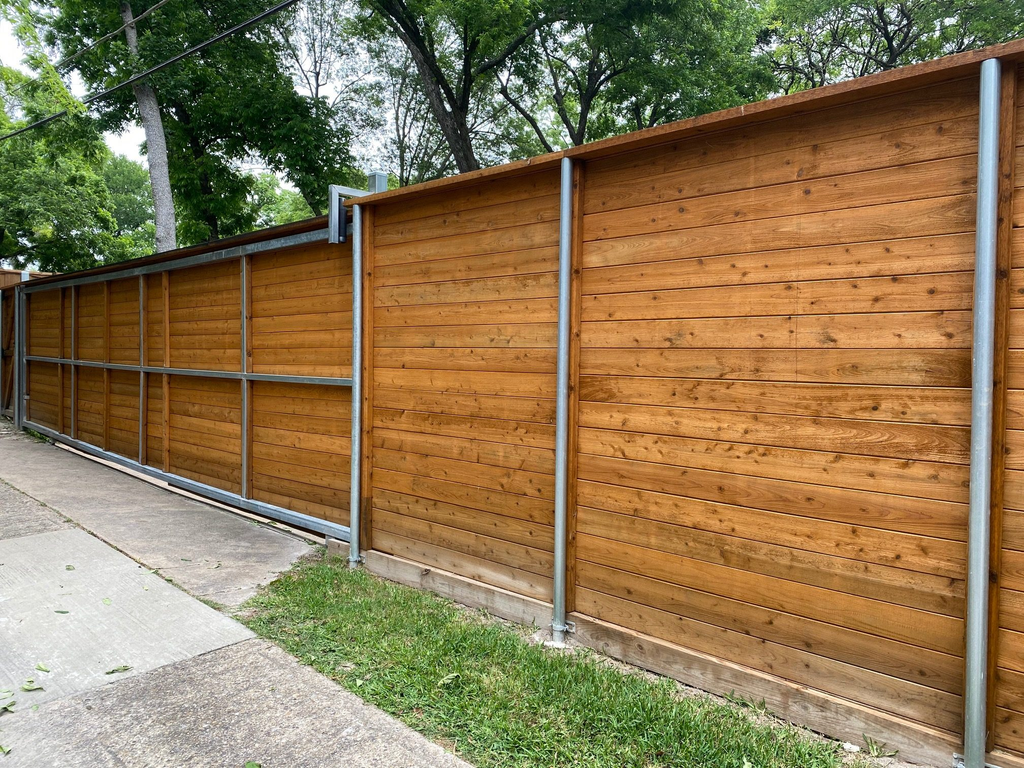
To maximize cedar’s lifespan in harsh soil conditions, quality builders pair cedar rails and pickets with galvanized steel posts rather than traditional wooden 4x4s. In moist clay soil, wooden posts rot underground within seven to ten years. Heavy-gauge galvanized steel posts eliminate subterranean rot entirely, anchoring the fence firmly against severe wind gusts. Applying a high-grade, oil-based penetrating stain every three years protects the wood fibers from UV breakdown and preserves its rich, warm color.
Ornamental Iron and Powder-Coated Steel
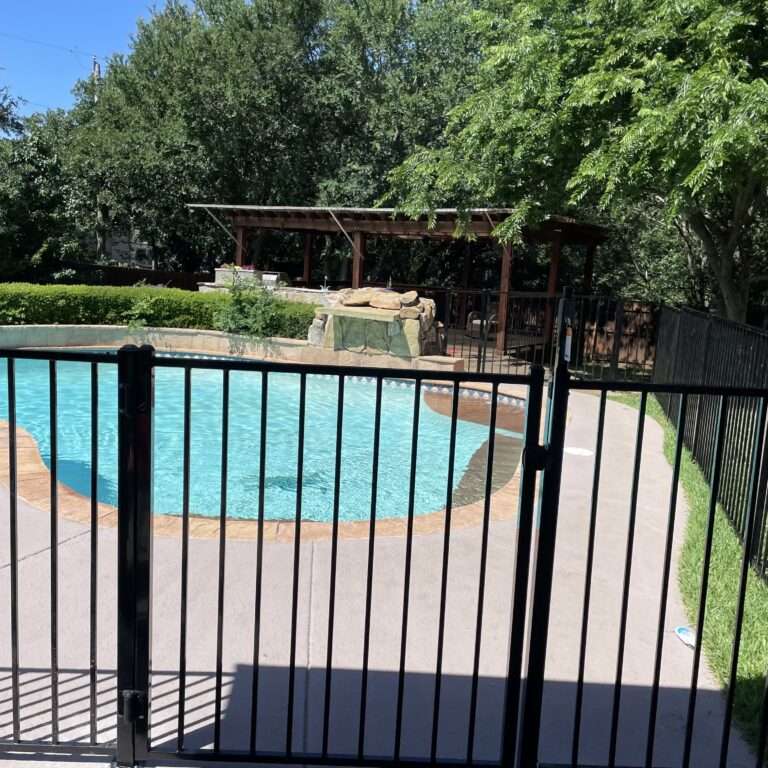
For properties where full privacy is not mandatory, ornamental iron and heavy-gauge steel represent the absolute peak of storm durability. One of the greatest threats to fences across Texas is straight-line storm winds. Because wrought iron and tubular steel systems use open vertical pickets, they provide virtually zero wind resistance. Wind currents blow directly through the openings rather than pushing against a solid barrier, eliminating the risk of storm-related blowouts.
Modern steel fencing is treated with specialized zinc coatings and baked-on electrostatic powder finishes. This industrial process prevents moisture and humidity from reaching the raw metal beneath, shielding the assembly from rust and surface oxidation. High-quality steel fences withstand blazing heat, direct hail strikes, and driving rain with almost no visible wear. Aside from occasionally washing off dust or checking gate latch alignment, metal fencing requires very little routine upkeep.
Vinyl Fencing: Modern Formulations and Climate Realities
Vinyl (PVC) fencing is often marketed as a maintenance-free alternative to timber. While vinyl never requires paint, stain, or water sealing, its performance in Texas depends entirely on product quality and manufacturing standards.
In northern climates, vinyl excels because moisture does not rot plastic. In Texas, however, the primary enemy is extreme solar radiation. Lower-grade, thin-walled vinyl fences purchased at big-box home improvement retailers can break down quickly under intense UV rays. Without adequate titanium dioxide impact modifiers, standard PVC turns brittle. A stray rock thrown by a lawnmower or an unexpected hail strike can easily shatter an aged, heat-weakened vinyl panel.
If you choose vinyl for your Texas home, insist on heavy-duty, commercial-grade profiles containing premium UV inhibitors and impact-resistant stabilizers. When properly formulated, quality vinyl handles high heat and humidity smoothly, requiring only a light pressure wash to remove seasonal mildew or soil splatter.
Why Pressure-Treated Pine Struggles in the Southern Climate
Pressure-treated Southern Yellow Pine is widely used across the country due to its affordability and wide availability. During manufacturing, chemical preservatives are forced deep into the wood cells to prevent subterranean termite damage and fungal rot. While pine is structurally dense and insect-resistant, it presents severe challenges under the Texas sun.
Treated pine holds significant moisture when shipped and installed. When exposed to 100-degree summer days, that moisture evaporates rapidly from the exterior surfaces while the interior core remains damp. This uneven drying rate creates intense internal stress, causing pine pickets to cup, twist, check, and split along the grain. Within just two or three seasons, a pine privacy fence often looks crooked and requires repeated repairs. While pine can serve as an economical choice for structural horizontal rails when properly fastened, it rarely performs well as a primary picket material under direct Texas sun.

Construction Standards That Make or Break a Fence
Material selection represents only one side of the equation; engineering and installation practices determine whether that material survives. According to structural guidelines published by the Federal Emergency Management Agency (FEMA), non-engineered residential fencing must incorporate proper post embedment depth and appropriate fastener schedules to avoid failure during high-wind events.
A fence built to withstand the Texas climate requires distinct structural standards:
- Footing Depth and Diameter: Steel posts should be set at least 24 to 36 inches deep in bell-shaped concrete footings to counteract surface clay movement and resist heavy lateral wind loads.
- Corrosion-Resistant Fasteners: Coastal humidity and chemical treatments corrode cheap steel nails. Utilizing ceramic-coated exterior screws or ring-shank stainless steel fasteners prevents dark streaking and board detachment.
- Ground Clearance: Pickets should never touch bare soil. Keeping pickets two inches off the turf prevents moisture wicking, protects wood from lawn trimmers, and stops ground rot before it starts.
- Three Horizontal Runner Rails: While some contractors cut costs by using only two rails, three horizontal runners are essential on six-foot and eight-foot privacy fences to prevent wood bowing under solar heat.
Property owners planning an outdoor perimeter upgrade can consult the local design and installation specialists at Rockwall Outdoor Living to explore custom cedar and ornamental steel solutions engineered specifically for local soil conditions and regional building codes.
Selecting the Right Solution for Your Property
Determining the best fence material for Texas weather ultimately comes down to balancing privacy needs, aesthetic preferences, and long-term maintenance commitments.
If privacy, natural warmth, and noise reduction are your top priorities, hand-selected Western Red Cedar mounted on heavy galvanized steel posts offers unmatched durability and timeless beauty. If your priority is security, longevity, and effortless wind management, commercial-grade powder-coated steel or ornamental iron provides decades of dependable service with minimal upkeep.
By investing in high-grade materials and pairing them with proper footing depth, your fence will comfortably weather the hottest summers, sudden freezes, and fierce spring storms that Texas delivers.